

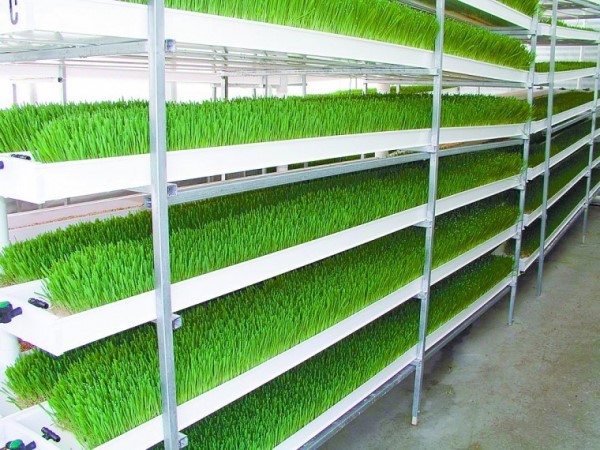
WHY HYDROPONIC FODDER FARMING?
What is hydroponic fodder? It is young tender grass grown soilless from cereal
grain(we woll use barley & maize) .It is considered to be the best livestock feed globally.
Nutrition value
They are highly effective, exceptionally nutritious feeds, which produces the highest protein, energy and very rich in vitamins such as B-carotene, trace elements, hormones, growth factors and enzymes.
Marginal use of land provides substantial ecological and economic advantages.For example research shows that hydroponic fodder grown in a 9m x 6m shed can feed
(supplement) daily, the same amount of cattle that graze on 1200 acres of
pasture. A lot of land can be seved for other human activities
Less water (90% REDUCES) It takes between 800ml to 1 litre of water to produce one kilogram of fodder as compared with 80 – 90 litres of water to grow a kilogram of green grass.
Constant Food supply Farmersusing this type of fodder production are guaranteed a consistent supply of quality fodder 365 days of the year irrespective of rain or sunshine.
100% no waste, sustainable and cost-effective.
Reduced labour requires minimal working hours per day. Depending on the size of the shed in use, research has shown that as little as 1 hour per day is needed to maintain and produce hydroponic fodder.
Type of Animal Fed
HYDROPONIC FODDER PROVED BENEFITS (BY HYDROPONIC AFRICA)
• Increase in milk production by 1.5 -2 liters per day or 10-15%
• Save at least $ 1.3 per day per cow
• Earlier breeding and higher conception rates
• Faster weight gain and easier weaning
• Higher butterfat content to 14 %
• Faster weight gain of 0.083kg as opposed to 0.053kg for grain-fed.
• Better quality meat- very lean meat • High-grade fiber
• Improved milk production
• Earlier breeding
• Faster weight gain takes 6 months to attain 60kg as opposed to 7 months to attain the same weight
• Easier weaning
• Higher quality meat with better texture reduces the fat coat from 14mm to 7mm
• Save at least $ 18 per pig from weaning to maturity
• Higher weight gain in broilers between 2.3 -2.5 after 6 months
• Higher egg-laying percentage to 90%
• Low sticky droppings
• The deep yellow color of the yolk